
The Hidden Cost of “Just Text Me” in Co-Parenting
Ad-hoc texting feels easy, but it creates ambiguity, missed handoffs, and conflict. Learn the real costs—and how to shift to shared agreements.
Why “Just Text Me” Feels Simple—Until It Isn’t

In co-parenting, “just text me” sounds like a low-friction solution: quick updates, fast answers, no new tools. But as schedules tighten and emotions run high, texting becomes a fragile system for family-communication. Messages bury key details, context disappears, and the same questions get re-litigated—Who’s picking up? What time? Which backpack?—adding to the mental-load on the person who’s “keeping track.”
The hidden cost is time and attention. Parents scroll, search, screenshot, and forward threads, often while working or managing kids. When a plan changes, the update may not reach everyone, or it lands without clarity about what replaced what. That ambiguity turns into missed tasks, last-minute scrambling, and “I thought you meant…” moments that are especially common in divorce-parenting.
Most importantly, kids feel the downstream effects: inconsistent routines, forgotten items, and handoffs that start with stress instead of steadiness. Co-parenting works best when expectations live somewhere more durable than a text bubble.
Where Texting Breaks Down: Ambiguity, Ownership Gaps, and Extra Emotional Labor

Texting struggles because it’s not built for care-coordination. A message can describe a plan, but it doesn’t reliably capture agreement, ownership, and history. If one parent texts “Can you grab him at 3?” and the other replies “Ok,” what happens if school dismisses early, traffic hits, or a grandparent steps in? Without a shared source of truth, small shifts create big confusion.
The breakdown accelerates when multiple caregivers are involved—babysitters, grandparents, after-school programs, new partners. Threads fork, details get retyped, and privacy gets messy: one helper needs pickup instructions but not health notes; another needs allergy info but not custody logistics. This is where family-communication can inadvertently increase conflict, because each new clarification feels like a challenge rather than a routine update.
The emotional labor is real: tracking what was said, proving what was agreed, and smoothing over misunderstandings. Over time, that mental-load becomes resentment—especially in divorce-parenting—because the “manager” role often falls to one person, regardless of intent.
From Reactive Messages to Reliable Shared Agreements (Without Adding More Work)
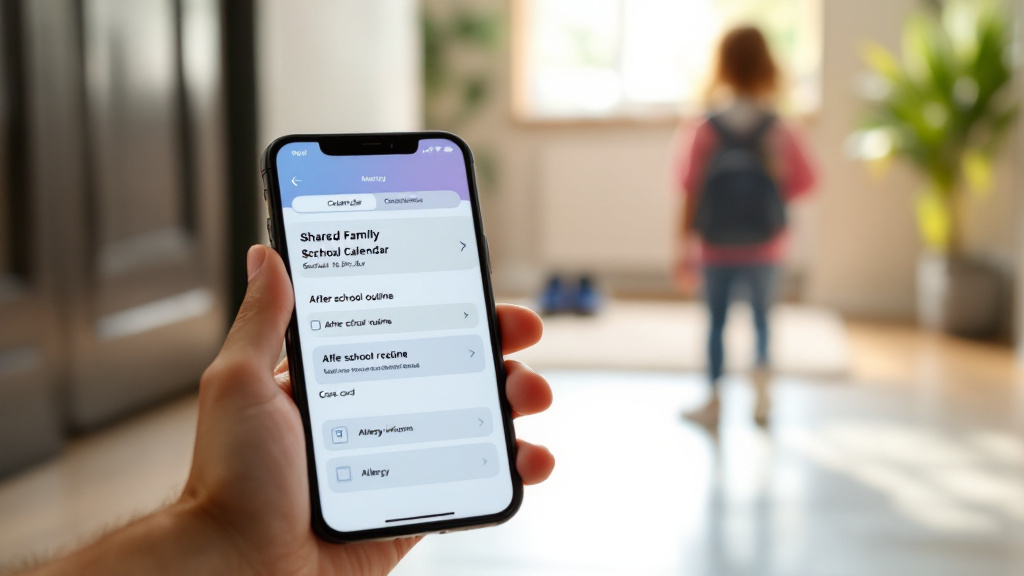
The goal isn’t to stop texting; it’s to stop relying on it as the system of record. A healthier co-parenting approach is to move recurring decisions into shared agreements that reduce back-and-forth. Three practical principles help: (1) one shared schedule, (2) explicit ownership for each handoff and task, and (3) repeatable routines that don’t require renegotiation every day. Text becomes the exception—“running 10 minutes late”—not the place where the plan lives.
For families managing multiple caregivers, role-based access matters as much as clarity. The babysitter may need pickup details and an emergency care card, while another caregiver only needs bedtime steps. When care-coordination respects “need to know,” communication gets calmer, and updates are less likely to be lost or overshared.
Tools can make this shift easier. Apps like HearthHandoff centralize a shared calendar, routines/checklists, and care logs with update history—so changes are approved, visible, and trackable. The payoff is less mental-load, fewer disputes, and more consistent routines for kids across households—what good family-communication should deliver in modern co-parenting.